
One of the greatest blessings in my life has been my opportunity to meet wonderful people in my chosen field of physical therapy. As a health provider, you are invited into the private world of others in the midst of a struggle. I have seen folks overcome some unbelievable odds to recover and claim their life after devastating illnesses and accidents. Discharge day is a wonderful day filled with mixed emotions. Every feeling from elation about going home and moving on to the fear of how life will be different as patients learn to manage on their own. Usually, there are big hugs and often tears on both sides as we part ways. There is a surprising level of understanding between patient and caregiver that has been driven by a force that breaks down almost every barrier between the hearts and minds between people, and that is suffering. Watching others struggle with pain with no immediate relief in sight, daily discomfort, and sometimes unfortunately, relentless suffering stirs something deep inside the soul. Likewise, having someone witness up close and personal your fight to maintain your composure in the face of suffering is nothing less than humbling. I was reminded of this as I have hugged shoulders, rubbed backs, and held hands while watching everyone from 250 lb. grown men to small, frail elderly women and young children shed tears induced by pain. At some point, pretense is carried away and what remains is the authentic force of a person searching to find a new path to recovery. Personally, I have been transformed by these experiences, humbled that God placed me in their story and recognize what a blessing health is and how much it is often taken for granted.
But physical suffering isn’t the only inflictor of pain. Many folks struggle with emotional scars, mental anguish, and illness, childhood memories of trauma and tragedy. It is safe to say that every person has faced moments of suffering of some kind. If you have ever watched a kid pull a band-aid off a boo-boo or a wobbling toddler topple, you know pain becomes a common companion as we venture into life. We start off whimpering and crying for a kiss to make it better and travel on to adolescence where we suck it up on the ball field or track, biting our lip so our friends won’t witness our frailties. Later on, we turn to friends or spouses to hug us or make us laugh to take our minds off our discomfort. Sometimes, we come to places where the common comforts we have used in the past don’t make the grade. Chronic illness, words like cancer and chemo, post-surgical complications, and the enemy called age bring a desperate search for comfort in the midst of our suffering. As we either endure or have to witness this in our loved ones, it can challenge our faith in God like nothing else. Most of us believe God is able to do anything, so our challenge isn’t that He can; we struggle with why He doesn’t. How we resolve this dilemma can lead us to deeper faith and greater strength or drag us into the swamp of resentment and bitterness where we drown in self-pity.
The Bible has quite a lot to say about suffering. So much so that it cannot be covered adequately in this short format. But the two folks I want to look at today are, of course, Job, the famous Sufferer, and the woman in the New Testament with the issue of blood. Both faced deep suffering, and both looked to God for deliverance.
In the book of Job, we find an upright Godly man who has experienced great blessing and personal prosperity. Not long into Job’s story, we see that he faces devastating property loss, his children, and then his health. His friends find him sitting in a trash heap, lancing boils that have covered his body with shards of broken pottery. The Bible is not clear how long Job fought the chronic pain that racked his body, but most scholars believe it was about seven years. However, as we read his lamentations, despite his cries and demand to know what the purpose of his suffering is. He wants to know if he has sinned to cause this anguish. God does not provide an answer but lends strength to endure. Job’s suffering yields a revelation in his life that God is present in our suffering(Job 42:5) and that ultimately God will redeem Job from his suffering. Job does teach us that we do not have to understand to prevail, but we must trust God explicitly in the face of suffering. Job says the words of the Holy One are what bring him comfort and joy. (Job 6:10)
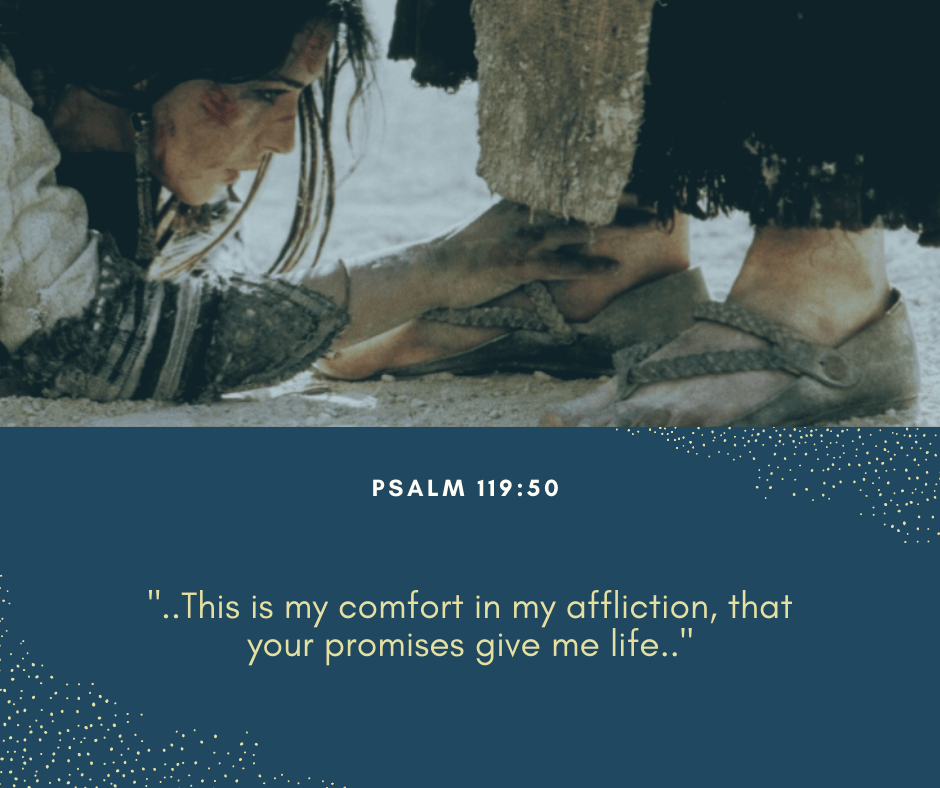
The common factor between Job and the woman in Mark 5 is that they remind us suffering involves patience. The woman in this account had suffered for 12 years with hemorrhaging. A never-ending menstrual cycle that probably was accompanied by all the other symptoms that a diseased reproductive system can evoke. Think of the fatigue and take in the fact that as long as she was bleeding she was considered unclean by her religion. In today’s language, she had been to the Mayo clinic and had exhausted all her insurance and savings with no cure or relief in sight. When she heard of Jesus and His miraculous healing, she knew if she just got close enough to touch Him, it would resolve her suffering. When Jesus felt the power leave him as she touched Him, He called out for who might have done this. The woman came forward, fell at his feet, and told Jesus her story though she was sorely afraid. But Jesus did not condemn her but rather confirmed her faith in Him, healed her, and set her on her way with peace in her heart. In both cases, Job and the woman had their lives restored and were healed.
But everyone’s story doesn’t necessarily follow that pattern. But the Bible promises that there is purpose in suffering and that God is the God of all comfort and that those who persevere in the trial will receive the crown of life.(James 1:12) We become acquainted and find intimacy with Christ in the face of pain and suffering that we would not know otherwise. God has brought many miracles out of disability, and some of the most faithful and trusting followers are those who face affliction. The only explanation is not that these folks have some spiritual genetics that was in their favor to endure, but rather the new amazing mercies of a sovereign God who was with them in every moment of their pain, comforting and lending strength. And they embraced God’s hand as opposed to demanding an explanation as to the criteria for trust. We have a suffering savior that intercedes with the Father for us, who understands pain and affliction, both physically and in every other way.
Even though I suffer, faith says,” I don’t have to like it, I don’t have to understand it, but I will use even this to honor and bring glory to your name Lord.” This is not pleasant, and if most of us are honest, we don’t like to be around those who suffer. It reminds us that health is fragile, and if we are not careful, a spirit of fear can be awakened in us like an earthquake. It can shake us. It can rob us of the opportunity to learn or show the compassion that Christ has called us to. Submitting our suffering or the suffering of those we love to God is an act of worship. It is a sacred offering that demonstrates our trust that God is a comfort and a healer, a strengthener, and ultimately a deliverer.
When I first started working in my field, I thought it would be a great opportunity to share my faith with those who had none. While those opportunities did present themselves, overwhelmingly, God placed me among other folks of faith in the midst of their health crisis. When I shared this with a pastor I was caring for in his last days of a devastating illness that would end his life; he shared with me that he always prayed for workers that were folks of faith would be provided to members of his flock when they were ill. When I asked why, he shared that we were good reminders that God was with his people in their suffering and was a source of comfort, an answer to prayer. When I think back on all the people that I shared the journey with, I realized this; more now than then, neither of us was ever alone. God was with us in our hour of need. Even though we suffered, He was there all the time.
 5oclockworker.com
Suffering is soooo hard but it does bring you closer to God if you turn to Him and He will bring you through it.
LikeLike